Shifting the diagnostic paradigm: from blind treatment to AI-enabled precision.
NovaLabs Women's Health Diagnostics bridges clinical accuracy and absolute affordability with a two-phase, software-first ecosystem — eliminating diagnostic blind spots in low-resource settings.
Traditional diagnostics are out of reach for most.
Traditional diagnostics are prohibitively expensive (R550–R1,500+), forcing public health clinics serving the majority of the population to rely on blind "syndromic management" — treating based on symptoms alone, without a confirmed result.
The Silent Epidemic
Syndromic management can miss a large share of asymptomatic STI cases, allowing untreated infections to progress into infertility and a heightened risk of HIV acquisition.
The AMR Threat
Over-prescribing empirical antibiotics to unconfirmed cases directly fuels dangerous antimicrobial resistance.
The Local Burden
Curable STIs remain common globally, and the addressable need in South Africa alone is substantial — the status quo is both a health and operational strain.
High-margin software, before scalable hardware.
We protect capital and derisk development through a strict, high-margin software rollout before integrating decentralized hardware pipelines.
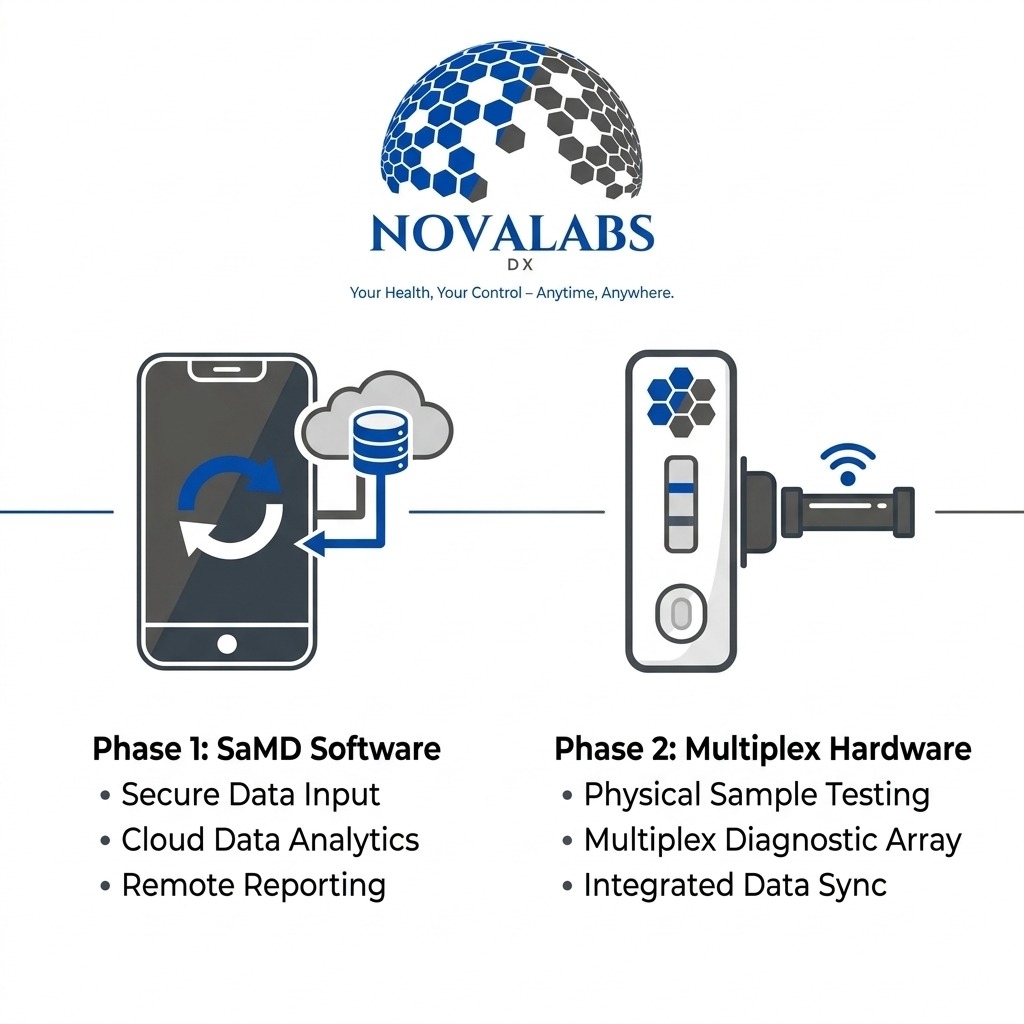
Software as a Medical Device (SaMD)
- AI computer-vision reads rapid tests via a localised algorithm, reducing human reading errors
- Standardised protocol delivery — evidence-based treatment plans and automated SMS tracking for community health workers
- High operating leverage: infrastructure scales with marginal costs approaching zero
Hardware Interoperability
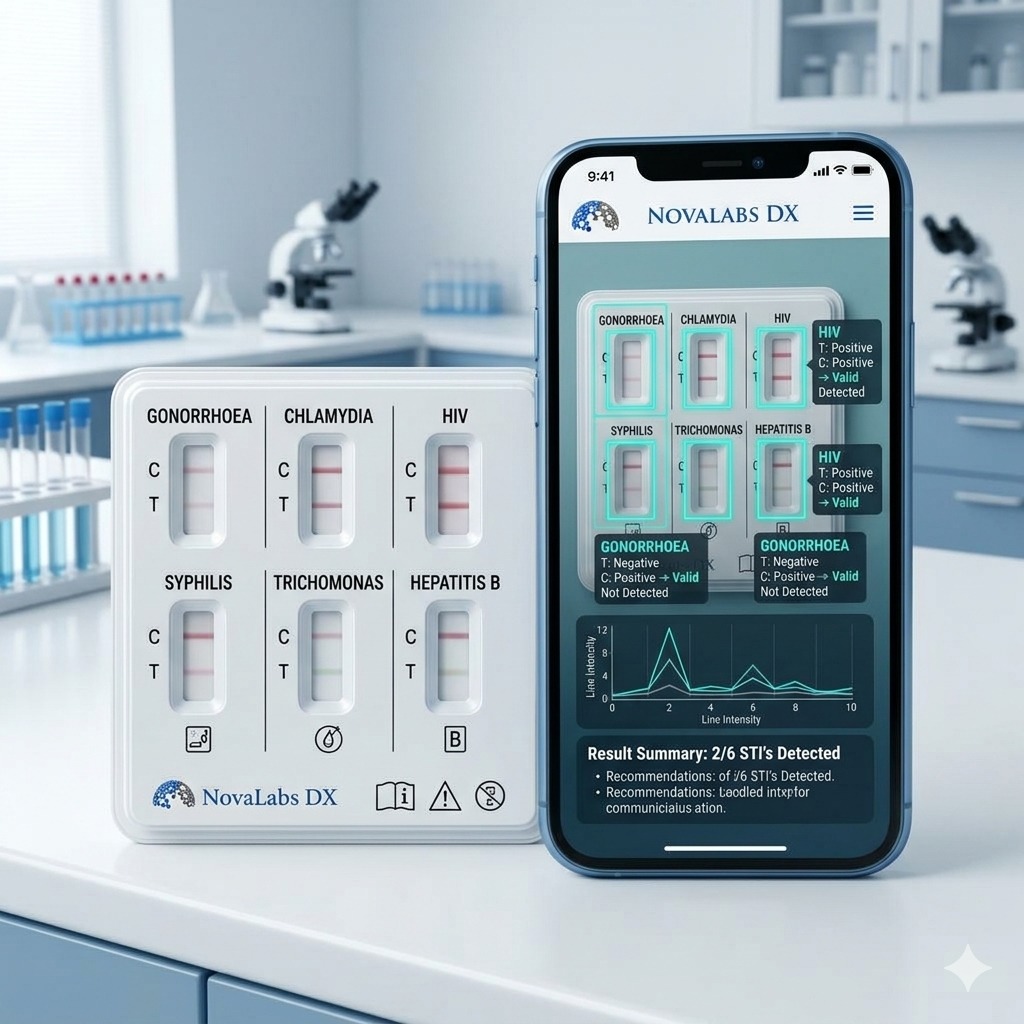
- Following full SaMD clearance, integrates with our low-cost multiplex rapid test kits
- Simultaneous multi-disease screening from a single sample
- Same app, same workflow — now paired with physical diagnostics
Objective AI triage at the clinical edge.
The NovaLabs Women's Health Diagnostics app replaces error-prone, subjective visual readings with a validated machine-learning pipeline — built to run on ordinary smartphones inside resource-limited clinics.
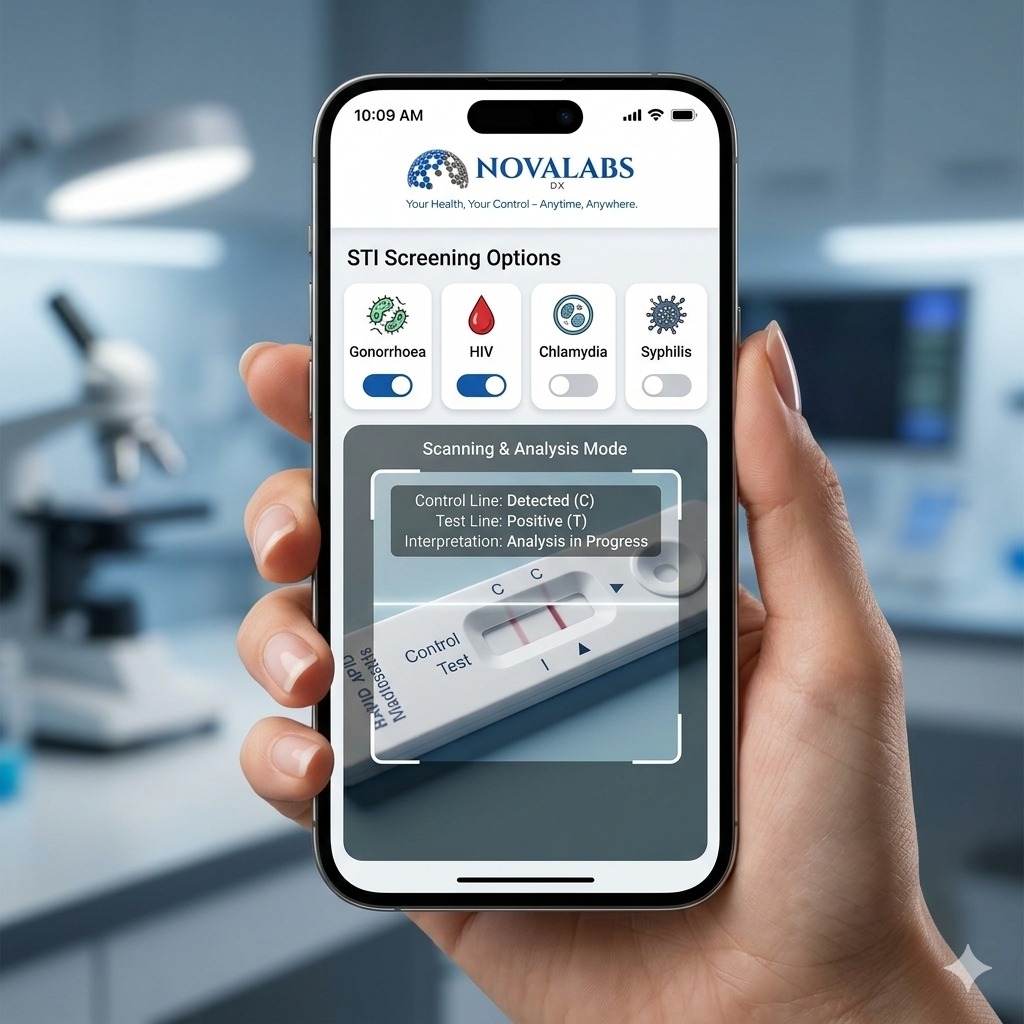
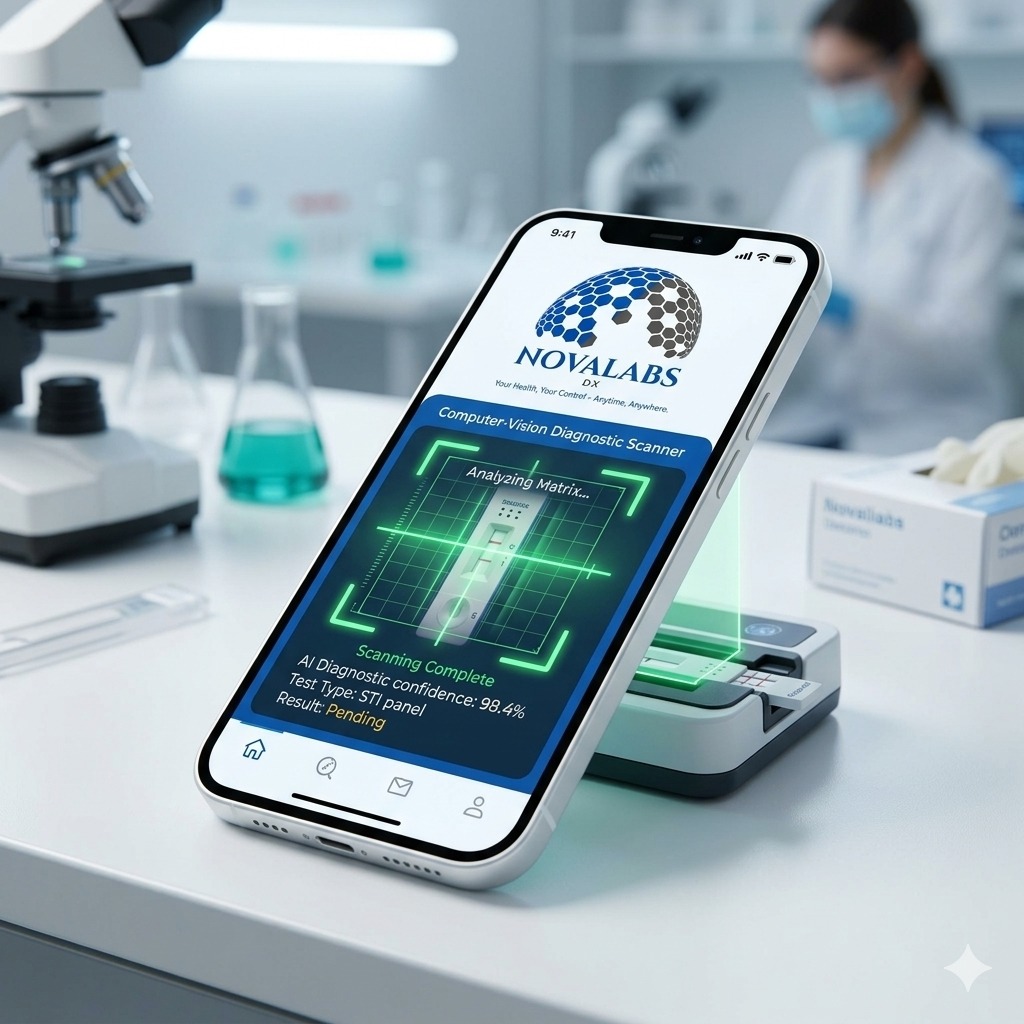
Computer-Vision Verification
Localised algorithms interpret rapid assays under varied, unstable lighting — reducing human reading bias.
Closing the Blind Spot
An affordable multi-disease interface helps move primary care away from blind syndromic management.
Built for Scale
The platform captures asymptomatic cases early, while preparing the pipeline for Phase 2 hardware integration.
High operating leverage, monetisable data.
As screening volumes expand, marginal processing costs fall — turning aggregated, anonymised prevalence data into a sustainable public-health asset.
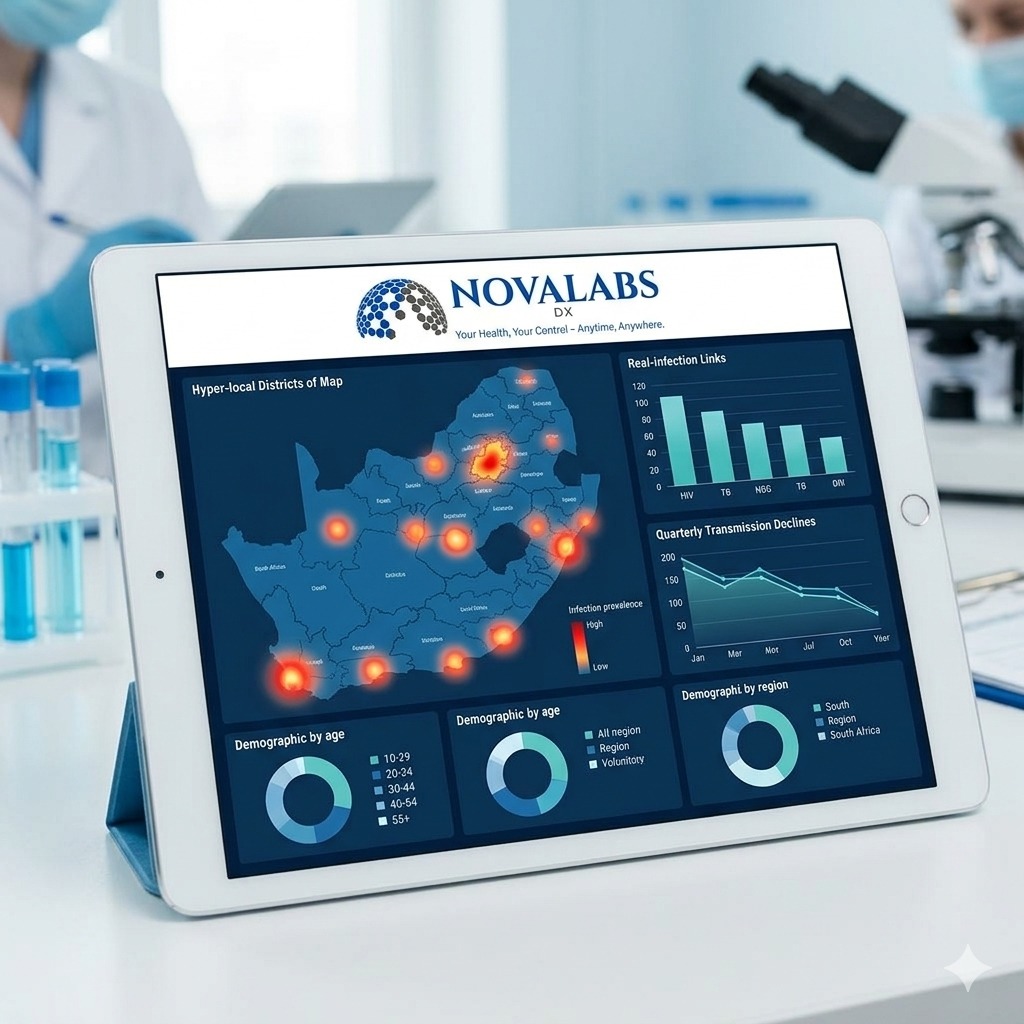
Hyper-Local Mapping
Anonymised diagnostic metadata aggregates into dashboards giving real-time visibility into outbreak hotspots.
Institutional Access
Provincial health departments, donor networks, and research bodies can access live prevalence data through licensing.
Cross-Subsidised Delivery
Data-network revenue is intended to help cross-subsidise local clinic deployments over time.
Closing the loop between screening and treatment.
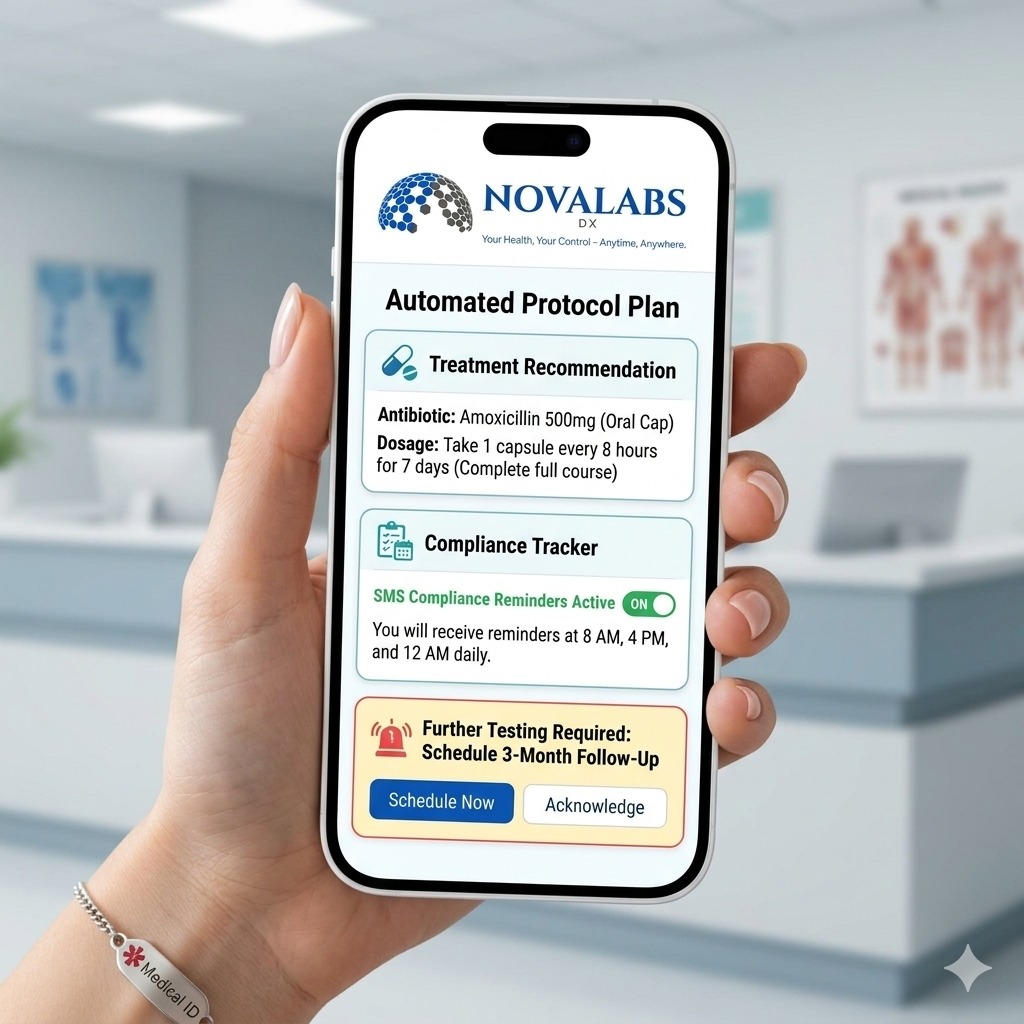
Clinical impact requires closing the loop between a precise digital screening and successful treatment follow-through. The app automates post-test workflows to help maximise patient return rates and support responsible antibiotic use.
- A standardised, protocol-linked treatment plan tied to verified test data
- Automated, multi-lingual SMS reminders to support treatment adherence
- A "test-before-treat" workflow with automated follow-up prompts where further testing is needed